PEMF Therapy and Full-Body Red Light: Supporting Pain Relief, Recovery, and Performance
Whether you're training for your next race, getting back to the mountains after an injury, or simply trying to move and feel better, recovery matters.
Training creates a stimulus. Your body adapts during recovery. But when stress, physical demands, pain, or inadequate rest start adding up, it can become harder to stay consistent.
That's where recovery tools may have a role.
At Brain & Body Recovery Lab (BBRL) in Evergreen, Colorado, we offer recovery-focused modalities, including pulsed electromagnetic field (PEMF) therapy and full-body red light therapy. These technologies work differently, but both are being explored for their potential applications in pain management, tissue-related processes, and recovery.
The key is knowing what each modality does, what the evidence supports, and how it fits into a larger plan.
Recover. Optimize. Perform. Our goal is to help you make informed choices about your recovery—not chase every new technology.
What Is PEMF Therapy?
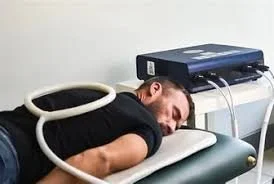
PEMF stands for pulsed electromagnetic field therapy. It uses changing electromagnetic fields to deliver specific forms of stimulation to the body.
PEMF devices vary significantly in their field strength, frequency, waveform, treatment protocol, and intended use. As a result, evidence for one device or clinical application cannot automatically be applied to every PEMF system.
Certain electromagnetic field devices have established medical applications, including specific bone-healing indications. Evidence for broader wellness claims, general recovery, and athletic performance is more variable.
Depending on the device and indication, PEMF may be used as an adjunct to other care. It shouldn't be viewed as a replacement for appropriate diagnosis, rehabilitation, strength training, or medical treatment.
PEMF Therapy for Pain and Injury Recovery
Pain can affect movement, sleep, training consistency, and quality of life. Its causes vary, which is why treatment should begin with understanding the problem.
Research has investigated PEMF for selected musculoskeletal conditions and pain-related applications. Some studies suggest potential benefits in specific settings, but findings are not consistent across all conditions or devices.
PEMF is not a universal pain treatment, and it should not be assumed to accelerate healing from every injury.
What Are the Potential Applications of PEMF?
Musculoskeletal discomfort: Certain PEMF protocols have been studied for pain associated with specific musculoskeletal conditions. The strength of evidence depends on the condition and device.
Bone healing: Certain prescription electromagnetic bone-growth stimulators have recognized uses for specific bone-healing indications. These are not equivalent to every general wellness PEMF device.
Recovery support: PEMF is sometimes incorporated into broader recovery routines. However, evidence that it reliably reduces exercise-induced soreness or accelerates athletic recovery remains limited and mixed.
Movement and rehabilitation: When appropriate, PEMF may be considered an adjunct to a plan that includes progressive exercise, mobility work, and other evidence-informed interventions.
The goal is to use a modality for a reason—not simply because it's available.
What Is Full-Body Red Light Therapy?
Full-body red light therapy uses selected wavelengths of red and, in some systems, near-infrared light to expose a larger area of the body.
The underlying process is often called photobiomodulation. It involves the interaction of light with biological tissues and may influence cellular signaling and other physiological processes.
Different devices use different wavelengths, power levels, treatment distances, and exposure times. Those differences matter when evaluating research and choosing a treatment protocol.
Red light therapy is not the same as ultraviolet tanning, and full-body systems are not interchangeable with every targeted red light or laser device.
Red Light Therapy for Pain and Injury Recovery
Photobiomodulation has been studied for several applications, including selected musculoskeletal pain conditions and rehabilitation settings.
Some clinical trials and reviews suggest that particular protocols may help with certain types of pain. However, results depend on the condition, treatment parameters, and quality of the evidence. Research does not establish that every full-body red light system improves injury healing or recovery.
Potential Areas of Interest
Musculoskeletal pain: Targeted photobiomodulation has been investigated for selected joint, muscle, and tendon-related conditions. Benefits are not consistent across all applications.
Exercise-related soreness: Researchers have explored whether red and near-infrared light can influence recovery following exercise. Results vary, and evidence for whole-body treatment is less established than some targeted protocols.
Tissue-related processes: Photobiomodulation may influence cellular signaling involved in tissue responses, but laboratory mechanisms alone do not prove that a treatment accelerates healing in real-world injuries.
Rehabilitation support: When clinically appropriate, light-based therapies may be considered alongside progressive loading, movement training, and other established rehabilitation strategies.
If you're dealing with a significant injury, the first step is determining what is injured and what type of care is needed.
PEMF vs. Full-Body Red Light: What's the Difference?
Although both modalities are used in recovery settings, they deliver different types of physical energy.
Neither modality is automatically better than the other. They have different mechanisms, and evidence supporting one application doesn't establish effectiveness for another.
The right choice depends on your goals, medical history, the available device, and what the evidence supports.
Using PEMF and Red Light for Sports Recovery
Athletes and active adults often want to recover faster, maintain training consistency, and manage the physical demands of their sport.
PEMF and red light therapy may be considered as optional additions to a recovery routine, but neither should replace the fundamentals:
Sleep: Adequate sleep supports physical recovery, cognitive function, and training adaptation.
Nutrition: Sufficient energy, protein, and appropriate micronutrient intake help support training and tissue maintenance.
Hydration: Fluids and electrolytes should reflect activity, environment, and individual needs.
Progressive training: Appropriate loading and planned recovery help build capacity without repeatedly exceeding tolerance.
Rehabilitation: Injuries may require specific exercises, load management, and clinical supervision.
At BBRL, we believe recovery tools should complement these foundations rather than distract from them.
For a mountain athlete, for example, a useful plan might combine strength and mobility work, appropriate aerobic conditioning, adequate nutrition, and selected recovery services. A modality can be added when there is a clear reason to try it, with realistic expectations about what it may accomplish.
PEMF and Red Light for Health Optimization
Health optimization means more than adding treatments to a routine. It involves understanding your goals, establishing a baseline, and deciding which habits and interventions are most likely to make a meaningful difference.
Some people explore PEMF or full-body red light as part of a broader wellness routine. However, evidence that these modalities improve longevity, prevent disease, or optimize health in otherwise healthy people remains limited.
At BBRL, we encourage a practical approach: start with the fundamentals, identify specific goals, and consider additional tools based on their potential value and limitations.
A more complicated recovery routine is not necessarily a better one.
What Does a Recovery Plan at BBRL Look Like?
Brain & Body Recovery Lab brings multiple recovery and performance services together in one space. Depending on your goals and individual suitability, your routine may include PEMF, full-body red light, hyperbaric oxygen therapy, IV therapy, compression-based recovery, or other available services.
Each modality has its own evidence base, risks, and limitations. Combining treatments does not automatically produce better results, and the ideal combination has not been established for every goal.
Our approach is to help you understand the options, consider relevant safety factors, and build a realistic plan around your activities and priorities.
If you have persistent pain, a significant injury, unexplained symptoms, or a medical condition, seek an appropriate clinical assessment before relying on recovery technologies.
PEMF and Red Light Therapy in Evergreen, Colorado
You don't have to be a professional athlete to care about recovery. Whether you're hiking, skiing, cycling, lifting, training for an endurance event, or simply trying to stay active as you age, feeling and functioning well matters.
At Brain & Body Recovery Lab in Evergreen, Colorado, we offer recovery-focused services designed to complement the habits that support long-term health and physical performance.
PEMF and full-body red light are two technologies you can explore as part of that process. The important thing is understanding what each modality may offer, what it cannot promise, and whether it fits your needs.
Ready to explore your recovery options? Connect with Brain & Body Recovery Lab to learn about our PEMF and full-body red light services and find out whether they may be appropriate for your recovery and performance goals.
Medical disclaimer: This article is for educational purposes only and does not replace medical advice, diagnosis, or treatment. Evidence varies by device, protocol, and clinical indication. PEMF and red light therapy are not guaranteed to relieve pain, accelerate healing, or improve athletic performance. Follow device-specific safety guidance and consult a qualified healthcare professional when appropriate.